
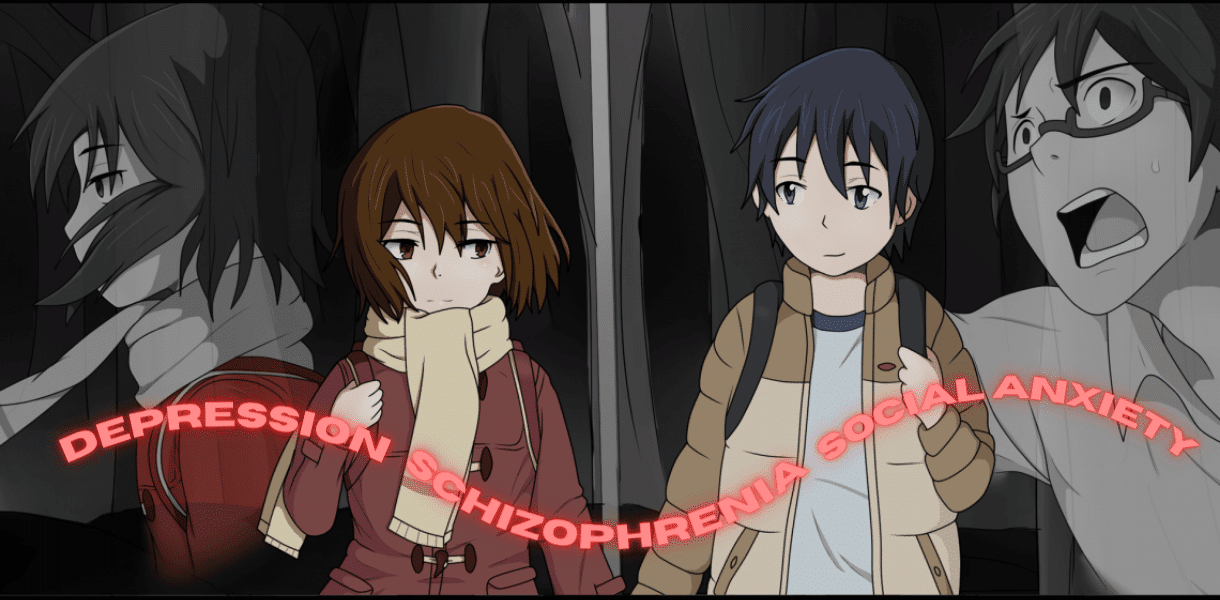

In today’s world anime has become globally popular among teens and adults alike. Japan created its first animation, named Namakura Gatana, in 1917. Since then, it has evolved in formatting, drawing, and animation techniques to come to the form of anime that we see today.
As we move into 2026, the conversation around anime and mental health has shifted from ‘is it good or bad’ to ‘how can it be used for healing.’ Recent studies in India and Japan have even begun exploring ‘Anime Therapy‘ to help teens process complex emotions.
Anime has always been a medium that tackles human emotions in their rawest form. Unlike American animation, anime has focused on different mental illnesses like PTSD, Depression, etc. through its storyline.
Anime significantly impacts teenage mental health by providing a relatable medium for exploring complex emotions like PTSD, anxiety, and depression. While darker themes require parental guidance to avoid triggering distress, many series offer ‘catharsis’ a healthy emotional release—helping teens build resilience and empathy through character-driven storytelling.
Anime and The World of Imagination
It is impossible to discuss the involvement of anime in the lives of children and teenagers alike without discussing the contributions of Studio Ghibli. Studio Ghibli was created in 1985. Since then it has been a constant force in creating beautiful imagination in children’s minds.
Anime can also stimulate imagination and creativity in children. Most anime stories are based on a world that is different from the real world in varied ways, some have supernatural characters or powers, some revolve around a sense of wonder. Such creative stimulation can leave a very positive sense of art and creativity among young children and teenagers Also, expecting a completely unexpected outcome has been one of the main themes in almost all anime series or movies. This can make children learn to look forward to the future more expectantly and work towards a better life in general.
Anime and mental health awareness
For years anime has grown into the lives of teenagers worldwide. Many anime writers and studios have actively used this platform to create stories that give a narrative of the complexities of the human mind and mental health.
Another anime named Beautiful Bones: Sakurako’s Investigations, deals with loss and mental barriers that humans create to deal with them. It shows how even the most intelligent people can have hidden mental illnesses that may not be easy to spot.
Another anime, Deadman Wonderland deals with personality disorder where the lead Shiro who is naturally a cheery girl becomes violent and dangerous to everyone around. There are many such anime series and movies that revolve around such complex human characters.
More recently, series like ‘Frieren: Beyond Journey’s End’ (2024) have been praised by mental health experts for their depiction of grief and the importance of human connection. Similarly, the gritty exploration of trauma in ‘Takopi’s Original Sin’ (2025) has highlighted the need for open discussions about domestic stability and its impact on a child’s psyche.
Anime and Its Darker Side
Even though anime has much to offer to the teenage mind, just like anything else anime too has a negative side. Most anime stories, especially the series, have a very engaging and long storyline that can be addictive for its audience. Once you start watching an anime it is very difficult to stop it in between for other work. This can also harshly impact concentration and studies in children and teenagers.
Also, the teenage years are a formative period of the human mind. The type of material that is presented to someone at this time can leave an everlasting effect. If we let children and teenagers watch anything that is available in the world unsupervised, they will surely stumble upon the darker side of the world sooner than later.
Anime series, like Death Note, show a twisted angle of justice, even though can be really thrilling and enjoyable, they can also have a darker impact on the young mind.
One of the biggest parts of anime is that the stories they tell are very influential and ideological. These anime stories mainly have an urge to give justice to the oppressed, but not always in the normal sense of the real world. Often, they have a very dark theme.
Frequently Asked Questions
Can watching dark anime cause depression in teenagers?
While dark anime itself doesn’t cause depression, it can trigger existing emotional vulnerabilities if viewed without context. However, many series actually help teens process complex feelings of grief and loneliness by providing relatable characters and cathartic storylines.
Which anime series are best for discussing mental health?
Series like Frieren: Beyond Journey’s End (grief), March Comes in Like a Lion (depression), and A Silent Voice (bullying/redemption) are excellent for starting healthy conversations about mental well-being with teenagers.
How can parents guide teens who watch “dark” anime?
Parents should focus on “co-viewing” and discussing the moral themes of the show. Asking questions like “Why did the character choose that path?” helps move the teen from passive consumption to active critical thinking and emotional processing.
Bottom Line
Anime stories on one hand can be a wonderful door to a world of fantasy, fiction, and imagination. At the same time, the dark vicious sides of anime can affect the mental health of its audience in their formative years.
Bottom line is, anime is not all innocent diversion, neither it is solely packed with darkness. It completely depends on how the viewer is going to perceive the notion of the story. And with teenagers, it might lead to a darker side very quickly if not properly guided.